

diegomarin.art
loading...
Kinesthetic and procedural dimensions of skill acquisition in dance improvisation
Memory in performance
Diego Marin-Bucio, Anne Danielsen, Noumouké Doumbia, and Rainer Polak

Research Article

Memory in Performance investigates how dancers draw on embodied memory when learning and improvising. This interdisciplinary study brings together dance research, phenomenology, cognitive perspectives on procedural memory, ethnographic fieldwork, and first-person embodied analysis.
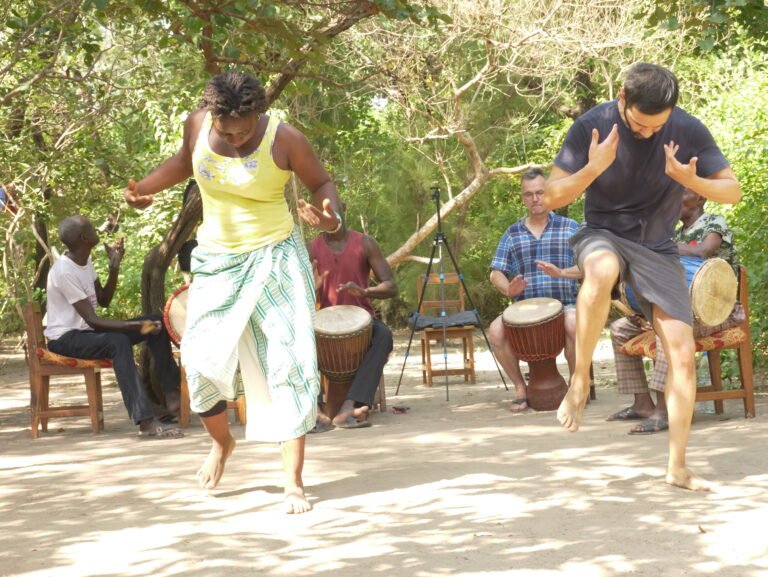


Based on an intensive apprenticeship in Malian djembe dance in West Africa, it shows that movement is not simply recalled as fixed sequences: kinesthetic and procedural memories allow previously learned movement qualities and experiences to be reorganized in real time.


The article therefore offers a new perspective on improvisation as a process in which past training, cultural knowledge, perception, and bodily memory continually shape what a dancer can do in the present.


Key words: autoethnography, autophenomenology, dance improvisation, dance learning, embodiment, kinesthetic memory, procedural memory

How to Cite:

Marin-Bucio D, Danielsen A, Doumbia N and Polak R (2026) Memory in performance: kinesthetic and procedural dimensions of skill acquisition in dance improvisation. Front. Psychol. 17:1751590. doi: 10.3389/fpsyg.2026.1751590

No Comments

Leave A Comment

VIEW
CLOSE