diegomarin.art
loading...

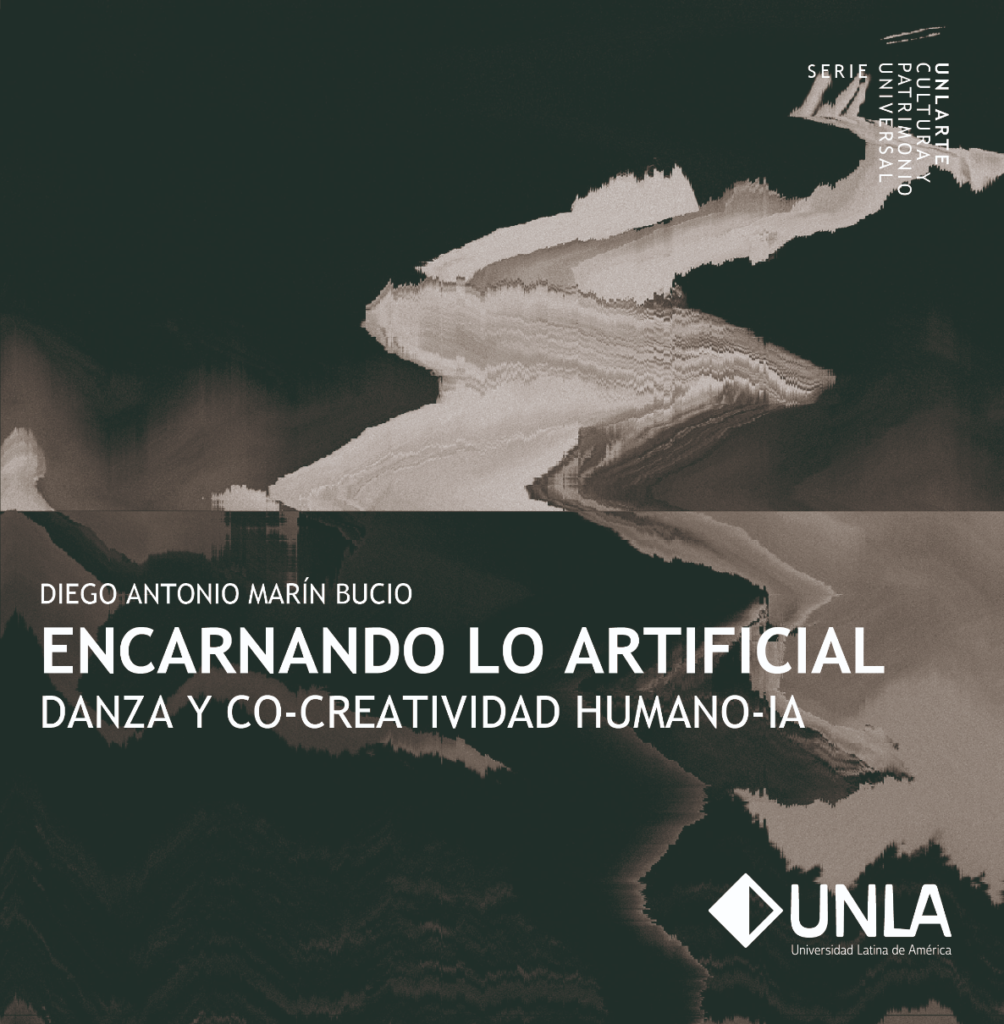
Embodying the artificial: Human-AI Co-creation of dance

By: Diego Marín | Copyright: 2022


What happens when machines begin to dance—not as tools, but as creative partners?


Book description

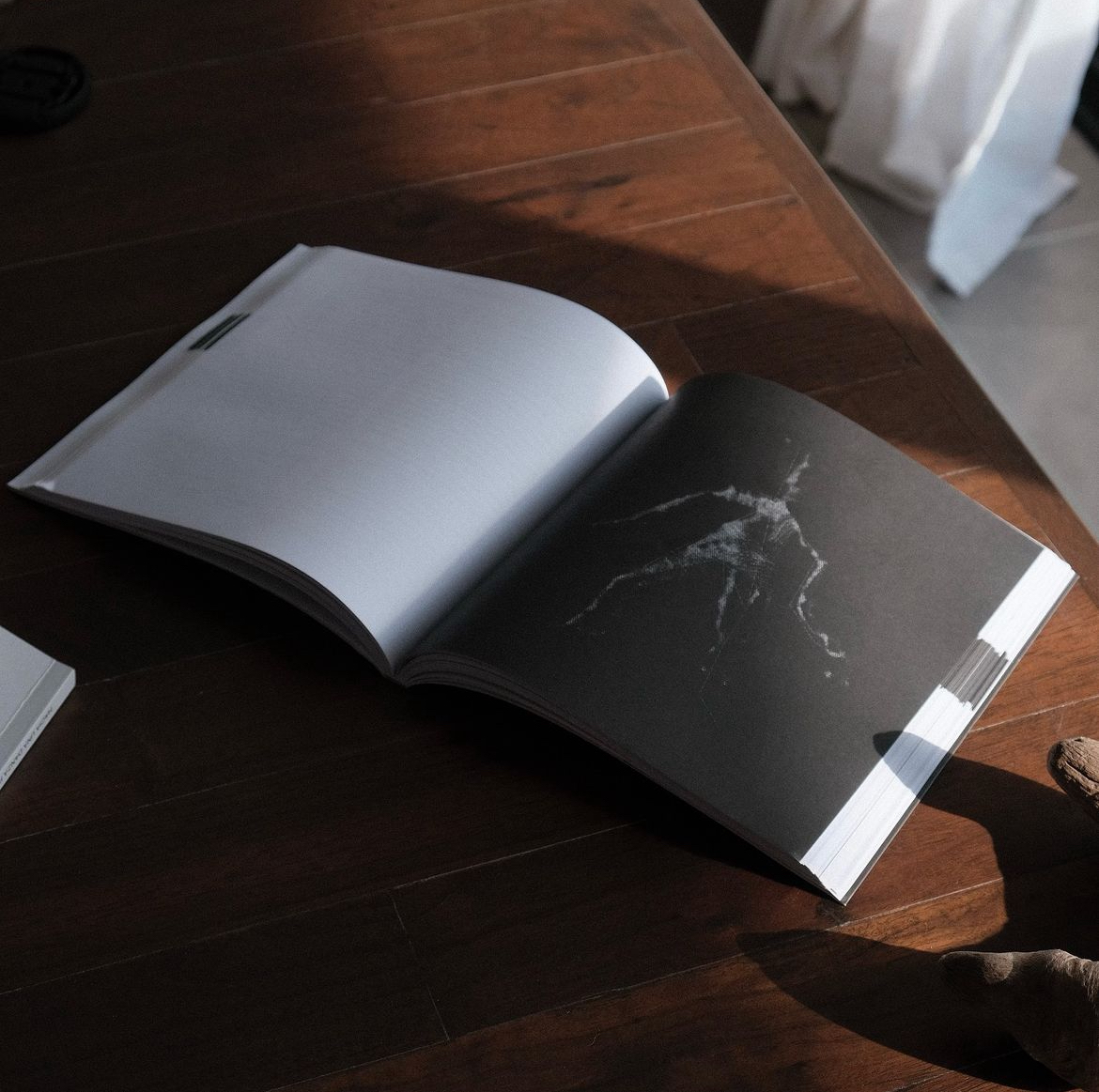
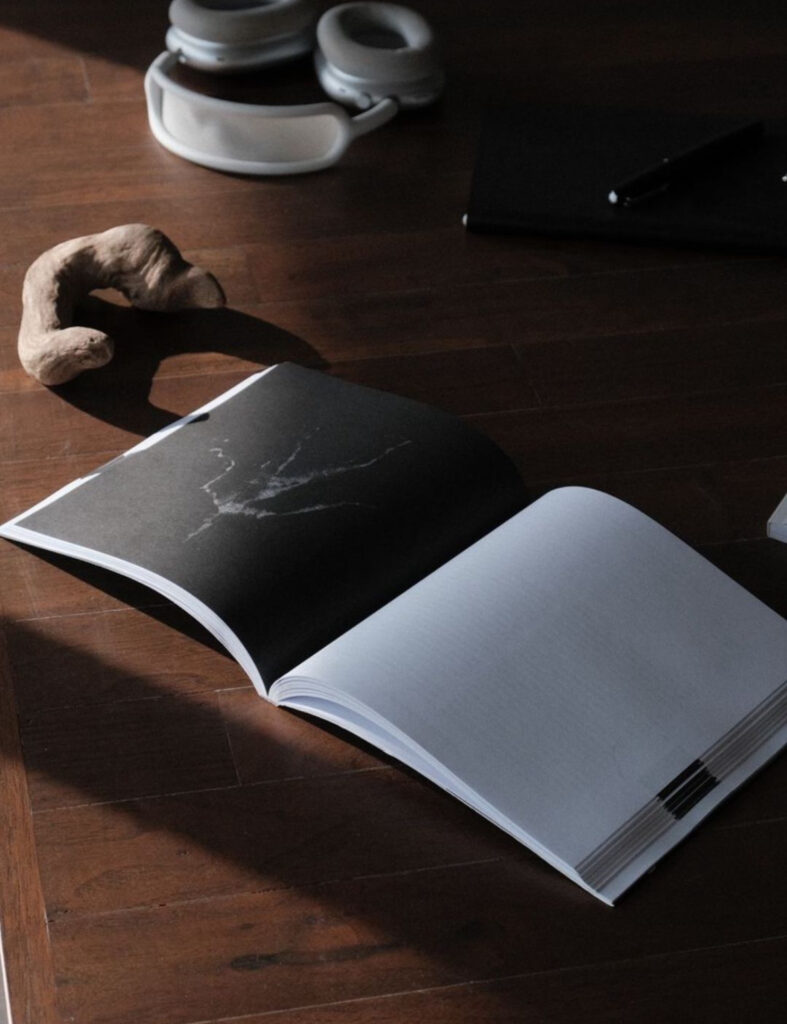
Embodying the Artificial examines how dance creation unfolds in dialogue with generative AI and related technologies. Grounded in ethnographic research, it foregrounds the kinesthetic dimensions of human-AI interaction, revealing how generative systems reshape the creation and performance of dance.

Through analyses of diverse human–AI dance practices involving AI avatars and related technologies, the book interrogates the ontological, epistemological, and ethical questions that emerge when machines become creative partners —challenging established notions of dance, embodiment, and creativity.


Bridging theory and practice, this research offers a conceptual and methodological framework for understanding human-AI interaction in dance. It introduces a clear taxonomy for categorizing interdisciplinary creative processes across different technological configurations and provides choreographers and movement artists with tools to navigate, design, and critically reflect on co-creative processes with artificial agents.

Reviews

"One of the most interesting projects in human-AI co-creation that I have seen"

DR. STEPHEN CAVE | Director of CFI Cambridge University

"The virtue of this book is to have compiled a coherent view of an emergent field, namely AI-human dance, it is therefore that I strongly recommend it to scholars interested in dance technology, engineers interested in artificial movement, or to dance scholars in general"

DR. JUAN FELIPE MIRANDA | Professor USPC | ICTMD Book Reviewer

"His pioneering proposal for collaborative dance creation using AI takes the research already underway by various researchers in the field of human-machine interaction to a new level"

DR. ALEJANDRA CERIANI Professor at Universidad Nacional de la Plata

Read full reviewes


English version (2026)

by Intellect Books & Chicago University Press


Spanish version (2024)

by Universidad Latina de América & Editorial Paso de Gato

Table of content


Preface

Introduction


Chapter 1: Technology and Dance Creation

1.1 A First Encounter with AI

1.2 Intermedial-Dance

1.3 High-Tech Puppetry

1.4 Computer-Assisted Dance: A Review of its History

1.5 Human-AI Dance: Evolution and Interactivity

1.6 Machinic Movement Matrix

1.6.1 Categories of Human-machine dance

1.6.2 Limitations and potential adaptation


Chapter 2: Dance Creativity: Human vs AI

2.1 Creativity and Human Dance: Implications for Artificial Intelligence

2.1.1 Construction of the kinesthetic experience in dance

2.2 Artificial Choreography and Contingency in Virtual Space

2.3 Consciousness, intention and attention in the creation of dance


Chapter 3: Glytch and human decoding of dance

3.1 The emergence of dance phenomena

3.2 Subjectivity and sense in dance

3.3 AI dance

3.3.1 Approaches to AI dance creation and performance

3.3.2 Ritual, aura and the experience of a dancing AI

3.3.3 From Perception to Participation: Non-Human Danceability

3.4 The kinesthetic experience: The virtual and the real


Chapter 4: Design and observation of AI dance

4.1 Field research I: RITMO Centre (University of Oslo)

4.2 Theoretical approach and research methods

4.2.1 State of the art

4.2.2 Data collected

4.2.3 Arrival in the laboratory

4.3 Dance as a source of technological development


Chapter 5: Embodying the artificial

5.1 Embodied technology: towards an extended creativity

5.2 Learning from the artificial

5.3 Sonification of dance: An experience of technological embodiment

5.4 Enhacement of the sensory and expressive body

5.5 Transhumanist communication: Agency, consciousness and negotiation


Chapter 6: (Co) Creation of Dance with AI

6.1 The AI dancer

6.1.1 Contemporary approaches to the AI dancer

6.1.2 The AI dancer as creative agent and collaborator

6.2 Field Research II: Embodying AI workshop (University of the Arts London)

6.2.1 Human-AI creative collaboration experiment

6.3 Creative sensory ecosystem of dance: A human perspective

6.3.1 Ontological considerations for human-AI dance co-creation

6.3.2 Interactive flow in human-AI dance co-creation


Chapter 7: Posthuman dance: Dancing bodies of flesh, light and steel

7.1 Field research III: Leverhulme Centre for the Future of Intelligence (University of Cambridge)

7.1.1 Designing an AI dancer

7.1.2 Getting to know the AI dancer: Collaboration, interactivity and control in human-AI kinesthetic creativity

7.1.3 Hybrid dance: A creation of human and artificial intelligence

7.2 Expansion of the kinesic signifier in the new humanities

7.2.1 Bodies of light: The virtual self through the object

7.2.2 Bodies of steel: Choreorobotics

7.2.3 Bodies of flesh: Technoculture in the human creation of movement


Chapter 8: Ethics, AI and dance

8.1 Fieldwork IV: Human-AI Dance in Public Performance

8.2 Limitations and Ethics on staging a digital AI dancer

8.3 The kinetic identity


Epilogue

References

Annexes

The author

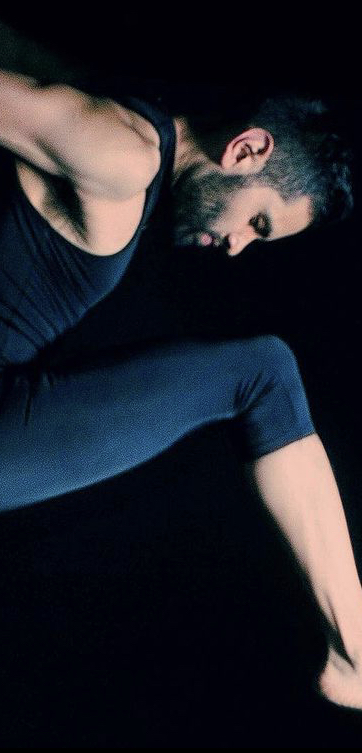
DIEGO MARIN-BUCIO

Interdisciplinary artist and researcher with a strong foundation in movement and physicality. His work combines theatrical expression, multimedia experimentation, and the crafting of evocative, mysterious atmospheres. His artistic and academic paths are deeply connected, as he explores the intersections of computer technology, dance, and embodied cognition philosophies.


In 2025, Marín received the “Saberes Danzados” Award from Mexico’s National Institute of Fine Arts (INBAL) and was shortlisted for the One Dance UK Awards 2022 in the United Kingdom. He has also been honoured with the artistic fellowships “Interdisciplina y Transdisciplina 2022” from the SACPC and “PAPIAM-D 2025” from the Mexican Ministry of Culture.


In his book “Embodying the artificial”, Diego Marín introduced a conceptual tool and method of human-AI dance co-creation. His theoretical work transcends mere technological innovation to delve into a profound philosophical inquiry, questioning the very nature and boundaries of art. 

No Comments

Leave A Comment

VIEW
CLOSE